Chapter I · The Port
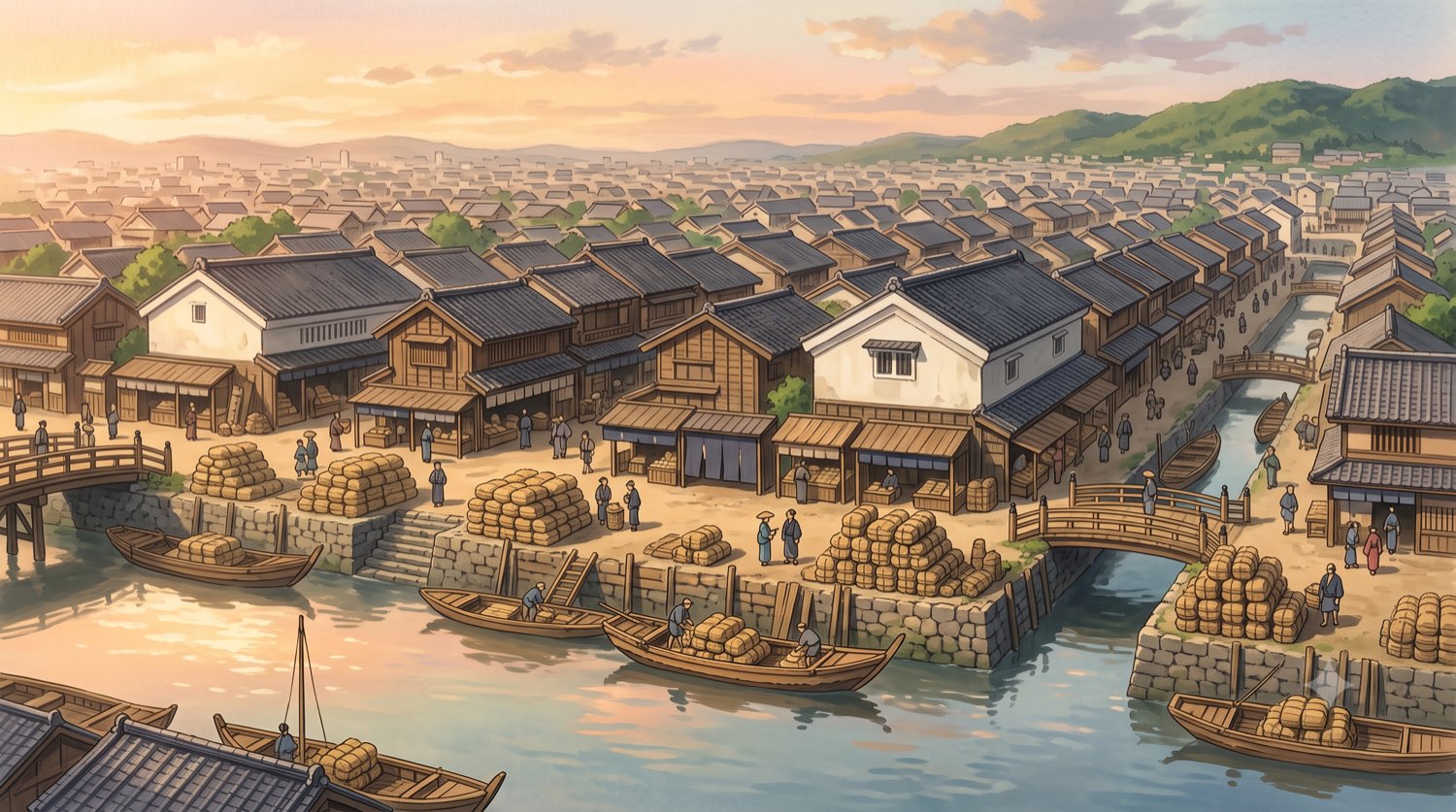
Sakata, 1750.
Boats came down the river loaded with rice, and the whole of Japan learned what it was worth from the men standing on this quay. The world's first futures market ran here — on paper, weather, and rumour.
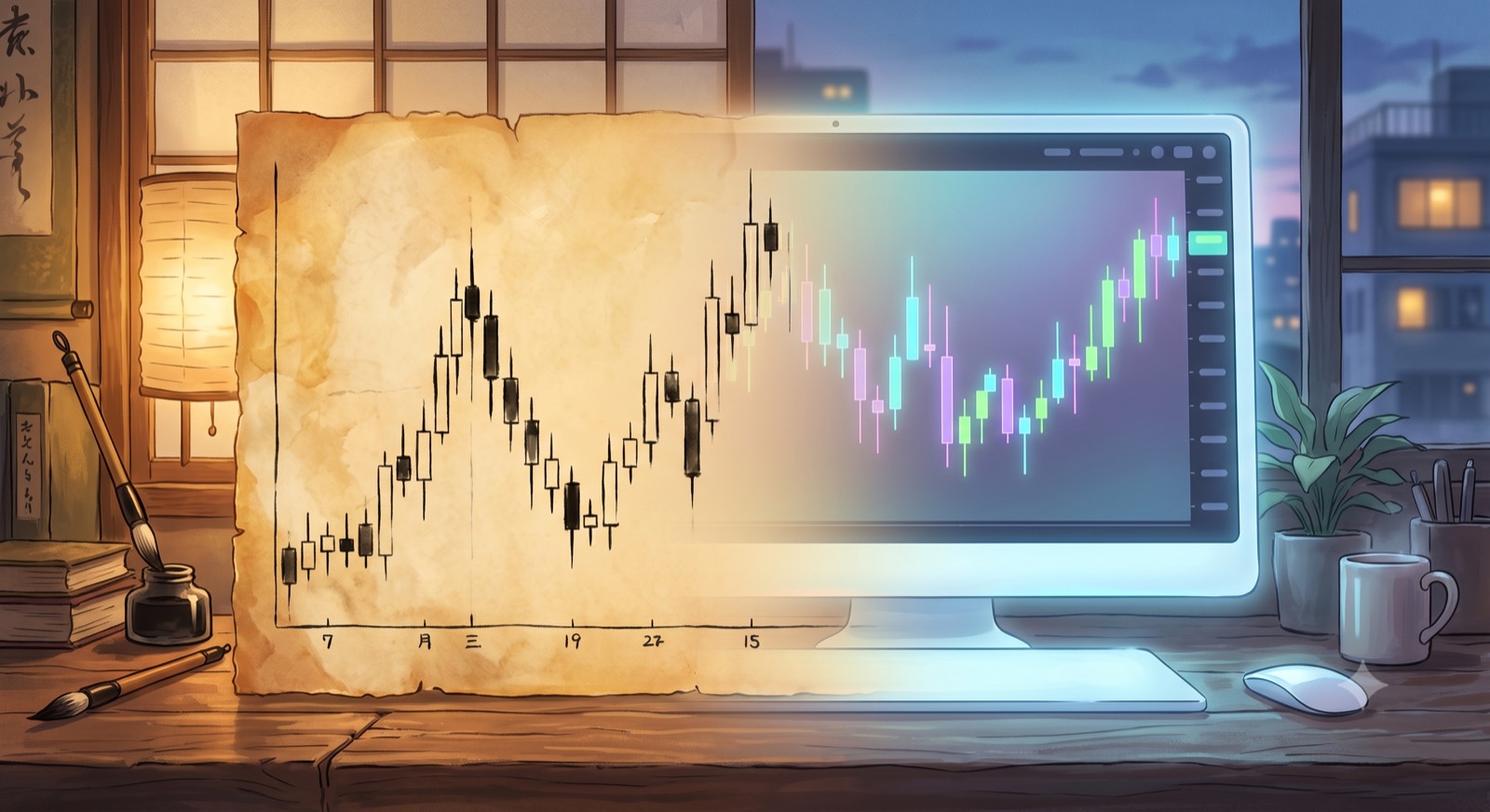
The oldest way of reading markets — candle by candle — executed by software that never sleeps, never hopes, and never forgets.
Boats came down the river loaded with rice, and the whole of Japan learned what it was worth from the men standing on this quay. The world's first futures market ran here — on paper, weather, and rumour.

Munehisa Homma traded rice in Sakata and did something nobody bothered with: he wrote down what the price did every single session, for years, and read the record back.
He wasn't looking for the news. He was looking for the shape of the crowd — where it panicked, where it got greedy, where it exhausted itself.
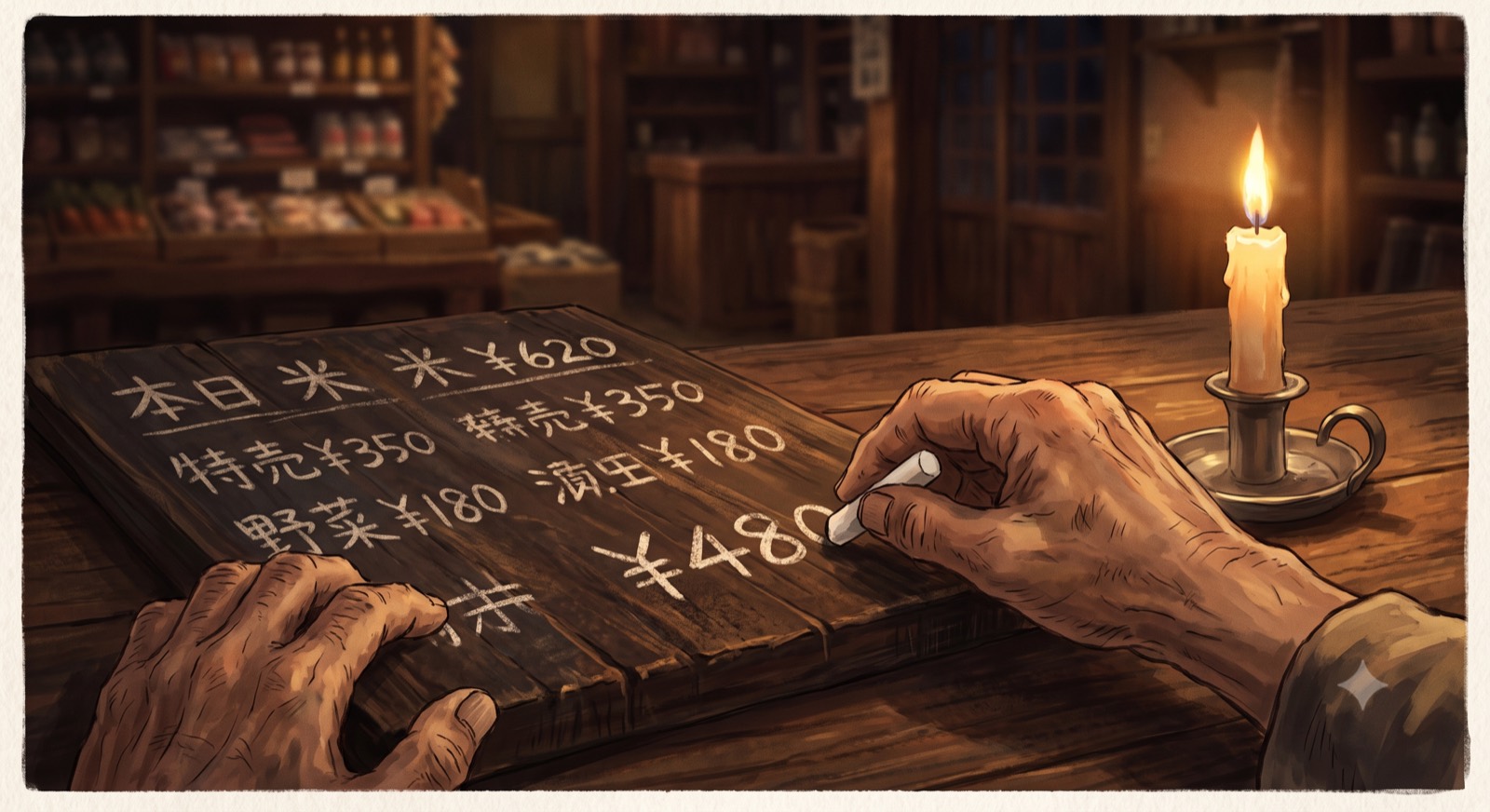
Where it opened. Where it closed. The highest it reached, and the lowest it fell. Nothing else was recorded, because nothing else was needed.
A body between the open and the close, a wick to each extreme. A full day of fear and conviction, compressed into a single brushstroke — and still, 275 years later, nobody has improved on it.

Every closed round in the campaign history finished green.
Small, repeatable, fee-aware. Compounding does the shouting.
Patience pays the orders that were already resting.
Paper first, live when trusted. The engine never leaves the desk.
Same shapes. Same crowd. Every timeframe, around the clock, acted on in milliseconds — with the discipline he had to hold in his own head.
Enter the Terminal